Explore 43 stops in Waguide’s Vatican Museums itinerary, beginning with the Gregorian Egyptian Museum and ending in the Sistine Chapel. Start at the first stop or choose a gallery or artwork from the list.
Use the official Vatican Museums map to find the Gregorian Egyptian Museum, where this reading itinerary begins. Follow museum signs and staff directions as you move between galleries. “Next stop” opens the next text in Waguide; it does not give turn-by-turn walking directions.
When you enter the Gregorian Egyptian Museum, you understand with excitement that this is pretty much the biggest exposition of Egyptian artifacts in the world. Here one may learn about Egyptian culture from the exhibits made in Mesopotamia and Syria many centuries ago.
The Gregorian Egyptian Museum was opened in 1839. With nine halls, it was established by Pope Gregory XVI to be the biggest collection of cultural heritage of Ancient Egypt.
Today you may see sculptures, papyruses, sarcophagi, the fragments of mummies. Pope Pius VII started to gather the collection with the artifacts of III century, the period of the Roman invasion in Egypt, which were discovered during the excavation.
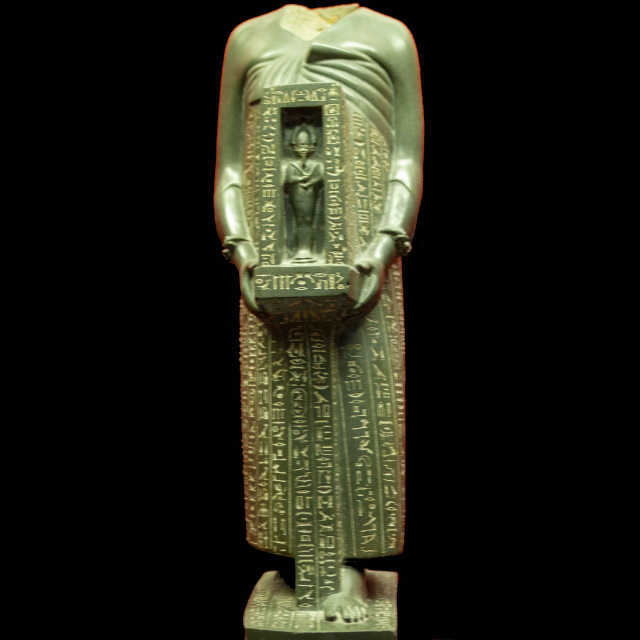
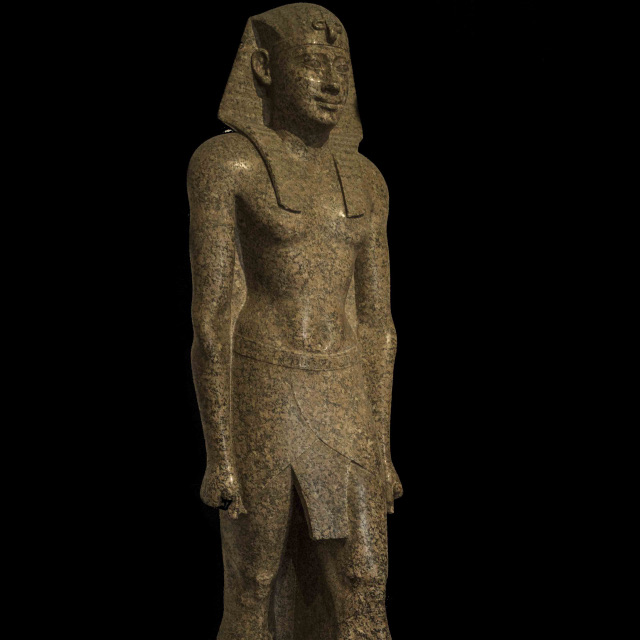
Do not pass by the sculpture of Ramesses II seated on the throne and the statue of Udjaḥorresnet that are displayed in the first hall among other numerous exhibits.
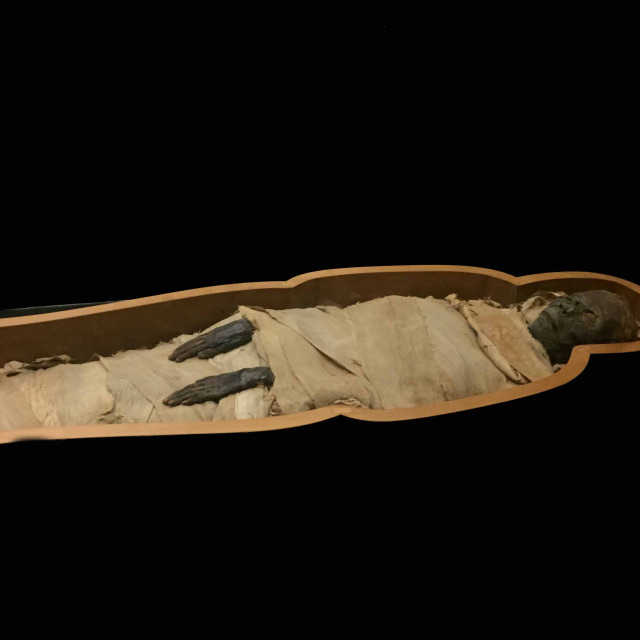
The second hall houses Egyptian painted wood sarcophagi, mummies, canopic jars and ushabti figurines.
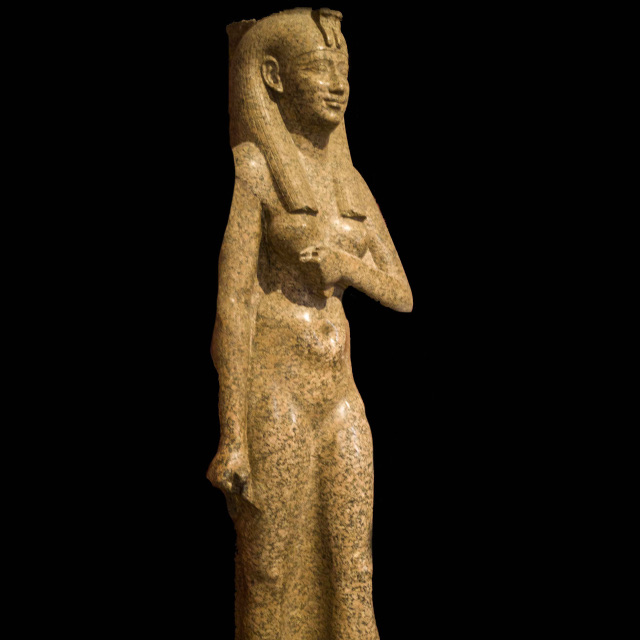
In the fourth hall a statue of Anubis draws special attention, in the fifth hall you should see the statues of Ptolemy II and Tiye.
The seventh hall holds the collection of Hellenistic and Roman sculptures made of bronze and clay, Islamic and Christian ceramics.
In the eighth and ninth halls there are artifacts of Mesopotamia and Ancient Syria.
Udjaḥorresnet was an ancient Egyptian religious and public representative, honorable nobleman and priest of Neith, the goddess of war and hunting.
Udjaḥorresnet held positions of prime-minister, diplomat, royal treasurer, chief physician, chief of copyists of the Great Texts and the commander of the Egyptian fleet.
He was a powerful person and took part in ruling Egypt. When he was the commander of the Egyptian fleet, Egypt was conquered by the Persian army, which put an end to XXVI Dynasty.
While digging the figurines ushabti bearing the name of Udjaḥorresnet were found in his Naophorous statue. The statue was in a limestone sarcophagus placed in the tomb. The second sarcophagus made of basalt, in the form of human body, was placed in the first sarcophagus. The Naophorus statue contains the inscriptions of the titles and honorable acts committed by Udjaḥorresnet at the court of the pharaohs.
The preservation of the body by embalming played a major role in the Egyptian culture. This is a traditional stage of burial. Ancient Egyptians believed that was how the soul of the dead reunited with his body after the death.
For the first time, the embalming was done in III millennium B.C., and after the Arab conquest of Egypt in 641 B.C. the tradition disappeared.
The entire process of embalming took around 70 days to complete by priests. They washed the body, removed its internal organs and covered it with so called divine salt to remove moisture from the tissues. The chest cavity was filled with resin to make the body heavy. The skin was rubbed and aromatized with aroma oil. Then the body was wrapped in linen bandages. Before placing in a coffin a mask was placed on the face of the mummy to protect and preserve it.
For the better preservation of the mummy, Egyptians began to remove the brain. But later they stopped to do it as the brain was considered to be the physical, emotional and intellectual core, center of human being.
The statues represent Ptolemy II and his sister Arsinoe II who became his wife. Ptolemy II was the king of Egypt in the 3rd century B.C. In addition to political affairs, he is famous for marrying his sister Arsinoe.
Having the throne, Ptolemy was seeking to extend its political influence beyond the borders of Egypt and take control over the territory stretching to Asia. For this purpose he strengthened his positions at sea. At that time his sister Arsinoe ran away from her husband in Macedonia to Egypt to become a queen. She was a perfidious and crafty intriguer in Macedonia. And she got married to her brother to take power.
According to ancient Greek legends, these two statutes were brought to Rome by the emperor Caligula. In Rome they embellished a building dedicated to his sister-wife Drusilla. She was deified as Ptolemy defied Arsinoe II.
The Pio-Clementino Museum continues to show the best classical exhibits.
Located in the Belvedere Palace, the Museum immortalized the names of its founders — Pope Clement XIV and Pius VI.
The pontiffs had all reasons to establish the Museum. At that time, in the second half of the eighteenth century, the Vatican treasury did not house the biggest collection of works of art that their predecessors had gathered for some centuries.
So the treasury and the Belvedere Palace were rebuilt. Since then the Pio-Clementino Museum began to place antique exhibits. You can see a variety of sculptures and sarcophagi everywhere, in the halls and the inner octagonal court with colonnades.
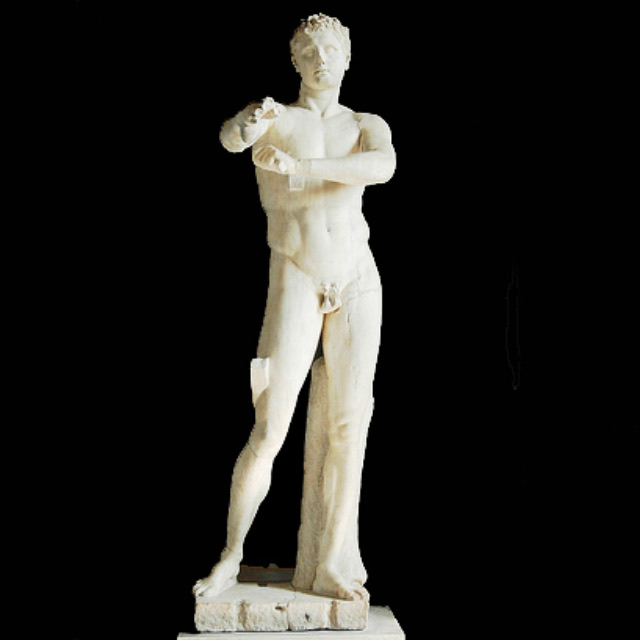
Apoxyomenos is a symbol of ancient sports and eloquent demonstration of a lean athletic body of Greek athletes.
The word "Apoxyomenos" comes from the Greek verb meaning to clean oneself. Before competitions ancient Greek athletes used to anoint their bodies with oil that was covered with sand during a tournament. After competitions athletes scraped off the mixture of sand and oils with a special spoon called the strigil.
The statue of Apoxyomenos shows a graceful, a little relaxed, but serious sportsman. His lean plastic figure serves as a silent evidence of the popularity of sports in antiquity.
This is a copy of the bronze statue of Apoxyomenos made by the Greek sculptor Lysippus in 320 B.C.
Now you are in the inner yard that is the nucleus of all Vatican Museums. Here the exposition of magnificent Roman sarcophagi with bas-reliefs is displayed.
Before this yard became a must-see attraction included into a guide-book of the Vatican Museums, the inner yard was an orange garden. But Pope Julius II improved it by placing antique statues in the shadows of trees here and there.
Later, in 1775, Pope Pius VI instructed to fence the garden area with an octagonal portico that framed the entrance to the palace. After thirty years four niches separated by arcades were built in the four corners. These are the Laocoön Niche, Perseus Niche, Apollo Niche and Hermes Niche. Therefore, the garden acquired the appearance you can see.
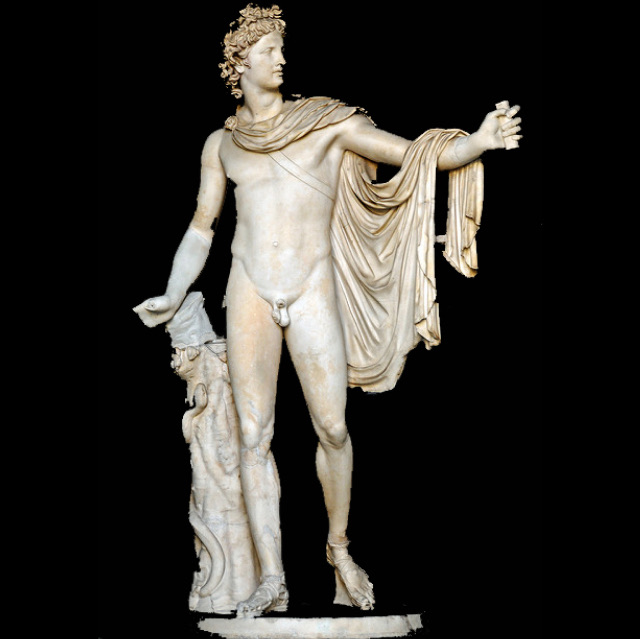
Apollo, the god of sun and light, was called "splendid" or "radiant". For several centuries it was an idol of male beauty.
And just after its creation the statue of Apollo of the Belvedere was admired by both ordinary people and prominent sculptures. The art expert Johann Joachim Winckelmann considered the statue as a benchmark of Greek art. He said that "of all the works of antiquity that have escaped destruction, the statue of Apollo represents the highest ideal of art". As soon as the marble statue was discovered not far from Rome in the middle of XV century, it was placed in the garden of Belvedere in the Vatican. So Apollo was called the Apollo Belvedere.
The sculpture of the Apollo Belvedere depicts the god as a mighty and handsome archer. His moves are dynamic, decisive and brave.
According to historians, Apollo supposedly holds a bow in his left hand and an arrow in his right hand. He seems to have just released an arrow, waiting what target it is going to stick. The arrows and bow in his hands represent his right to punish sinners and purify repentant persons from their sins.
Apollo's head is crowned with a laurel wreath, a symbol of winner. Near the youth is a tree trunk with Dragon Python killed by Apollo in Delphi.
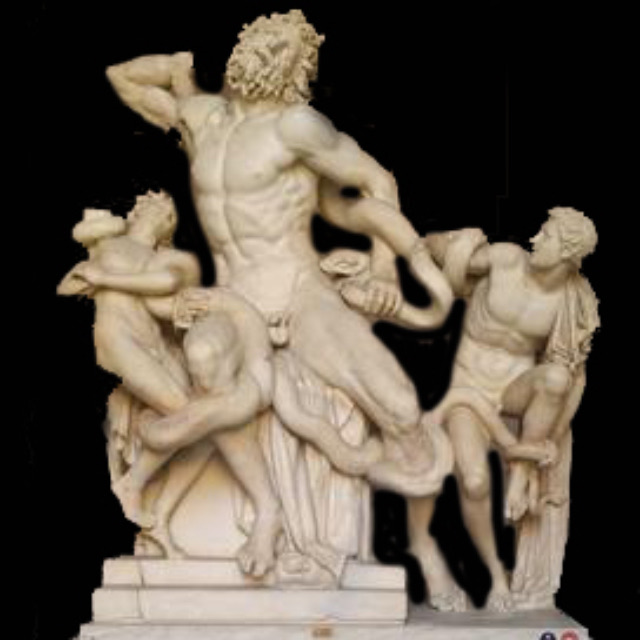
The group of statues of Laocoon and His Sons shows Laocoon and his sons being attacked by sea serpents.
At the height of the Trojan War Laocoön warned Trojans about the cunning and artfulness of Greeks. He asked the citizens not to take the Trojan horse. But the people did not listen to Laocoön, and then he decided to throw a spear to show what it was.
But the mighty Poseidon wanted Troy to be ruined, so he had to prevented Laocoön from disclosing. Poseidon sent two huge serpents to attack Laocoön and his sons. The sea serpents came up from the sea, coiled the necks of their victims and killed them.
The group of statues expresses melodramatic teatricalism. The sculptor masterfully used his knowledge of human body to engrave the figure of Laocoön at the tensest moment. The muscles of his body were tense with pain, and his mouth was distorted with death cry. He is mourning not so much himself as his sons.
Not only the description of the battle-to-the-death reflects the tragedy. The hopelessness is that the suffering of Laocoön and his sons are desperate as they will be killed in a few minutes. But even knowing it well, Laocoön still hope to push the sea serpents off and get rid of them.
The sculpture amazes with the realism and details of the muscles of human body, tense and resistant.
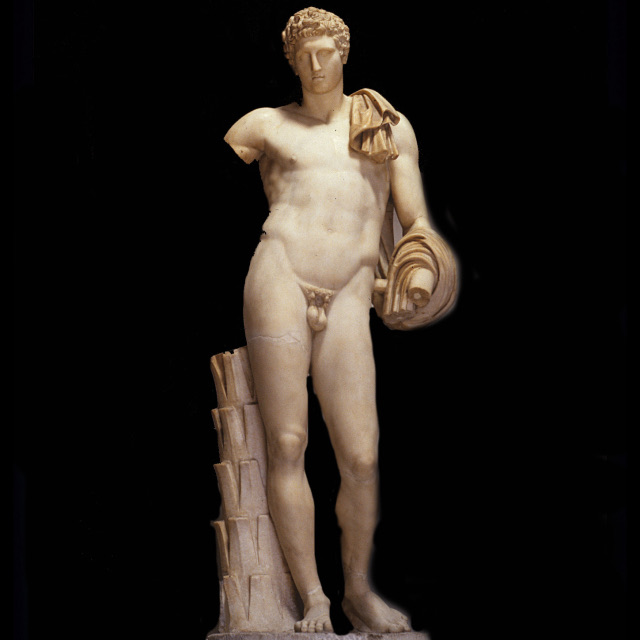
Hermes was the emissary of the gods and the conductor of souls of the dead to The Underworld. His other name was Psychopomp, what literally means the «guide of souls». Hermes was also the patron of herdsmen, ambassadors, travelers, magicians, alchemists and astronomers. Besides, merchants, tradesmen and athletes revered him. According to legends, Hermes invented units of measurement, numbers, and alphabet and taught it to people.
The statue depicts young, strong and handsome Hermes in quiet expectation. The young god looks ahead tranquilly. He is melancholic; his gaze is lowered, while a cloak thrown over his shoulder is wrapped around the forearm.
Hermes gently leans his right foot against the trunk of a palm tree. The author embodied in the sculpture that special dreamy charm with which Hermes is fulfilled. Marble conveys the smoothness and softness of the movements of Hermes amazingly, while shows the youth and strength of his figure.
You are in the Hall of Animals. This is the biggest world collection of antique statues of wild animals.
You are surrounded by almost 150 statues made of alabaster, colored and white marble.
Almost all exhibits you can see are copies of Greek originals made by command of Pope Pius VI. The sculptor Francesco Antonio Franzoni worked on the statues. And the statues of animals and birds were restored at the end of XIX century. In the Hall of Animals you will see the statue of Meleager with dog and the head of the Calydonian boar, the torso of Minotaur, Roman sarcophagi belonged to the representatives of the Scipiones.
Now you are in the Hall that was designed by the Italian painter Michelangelo Simonetti in 1782.
The Hall of Muses is decorated with sixteen marble columns. Look up and you will see the ceiling frescoes by Tommaso Conca. They represent Apollo and nine Muses surrounded by the famous poets of the ancient world — Homer, Aeschylus, Pindar, Virgil, Tasso and Ariosto.
In the Hall of Muses there are marble statues of Apollo and nine muses, the Greek protectresses of art. In fact, these sculptures are copies of the Greek original statues made of bronze in III century B.C.
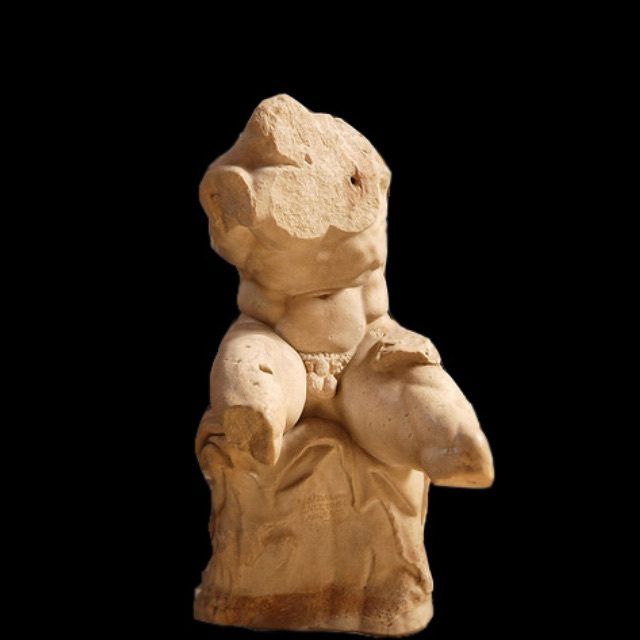
If you look at the center of the hall, you will see the Belvedere Torso, a model of ideally and beautifully proportioned body, according to Michelangelo.
Historians have debated about the origin of the Belvedere Torso. But despite the lack of the information on the statue, it is known that Michelangelo himself admired the refined and realistic lines of the musculature. While painting the ceiling of the Sistine Chapel with frescoes, he used the image of the carefully graved statue. But when the painter was asked to restore the missing parts of the torso, he refused to do it as he considered the statue to be ideal.
The neo-attic theorist Johann Winckelmann compared the torso with "a mighty oak that has been felled and stripped of its twigs and branches".
Historians assume that the statue may represent Heracles, Polyphemus, Prometheus, Ares or Philoctetes. But the most popular version speaks that it is the Greek Ajax, sitting on the stone and thinking of the suicide. Art experts established that the head was leaning towards the right hand. And he gripped the sword with which the hero would take his own life. Supposedly, during the Trojan War Odysseus was appointed a commander and not Ajax, and he was so furious that he killed himself.
The Round Hall is almost 250 years old. It was designed and built in classical style at its heyday, in 1780. Michelangelo Simonetti was charged with the project.
Look down and you will see that the floor is covered with Roman mosaic of III century, depicting the battles of Greek warriors with tritons and centaurs.
In the center of the Round Hall you can see a huge porphyry basin which has a circumference of 13 meters. Earlier it embellished the Holden House of Emperor Nero.
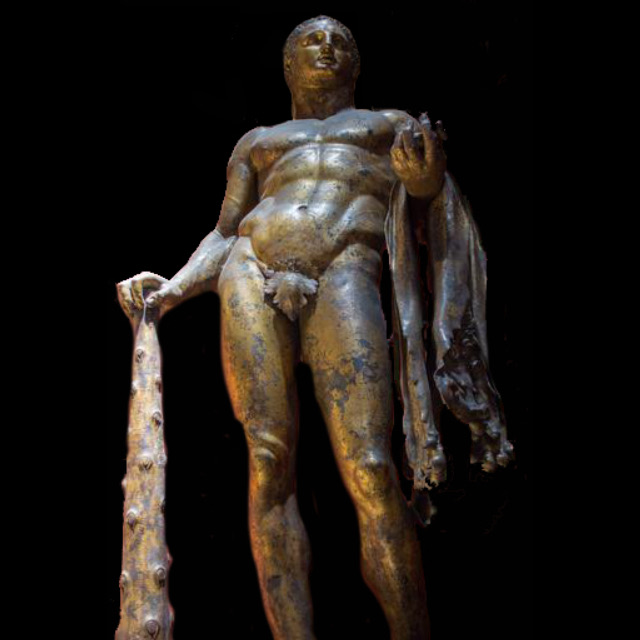
In the niches there are 18 statues and marble busts of Roman and Greek gods and mythological heroes. Have a look at the sculpture of Antinous. You can also find the portrait of Emperor Hadrian portrayed as Dionysus and the statue of mighty Hercules. This is the only gilded statue that survived unchanged since antiquity.
This is the world's only bronze statue covered with the antique original gild.
Heracles holds a heavy club, the lion's skin and the apples of the Hesperides in his hands. They remind about the first and last of the twelve Labours of Heracles.
The skin of the Nemean lion is a symbol of the first labour of Heracles. The athlete was supposed to kill a huge lion terrorizing the hills around Nemea. When Heracles found a cave where the beast lived, he blocked the entrance with a stone. Then he stunned the lion with his club and strangled the beast to death.
The apples of the Hesperides symbolize the twelfth, the most difficult task accomplished by Heracles. According to legends, he was supposed to go to a titan Atlas and fetch three golden apples from his garden. Atlas was holding up the sky on his shoulders, and the garden was guarded by the Hesperides, his daughters. Before Heracles managed to pick three apples, he found the way to the garden, tricked the dragon defending the trees and Atlas himself.
The Greek Cross Hall is designed by Michelangelo Simonetti.
Please look down at the entrance of the hall and you will see that the floor is covered with the precious mosaic dated at III century B.C. First, this mosaic tiled the floor at the villa in Tusculum, near Rome.
Interestingly, the Hall is built in the form of Greek cross. The Greek cross is a cross with rectangular arms of equal length that are perpendicular to each other. This particularity gave name to the hall.
An attentive visitor will notice Egyptian decorative elements in this hall. Thus, you can see sarcophagi in porphyry. One sarcophagus was made for Constantia, the daughter of Emperor Constantine, and the second one — for his mother Helena.
Look at the decoration of Helena's sarcophagus. The coffin is carved with Roman riders who defeated the barbarians. The Sarcophagus of Constantia is decorated with sculptured cupids picking grapes.
Do not pass by the unique exhibit — the figure of woman shown in motion. You can see it behind the Sarcophagus of St Helena. Historians believe that this is a single survived statue of Cleopatra.
Among other things, in the Greek Cross Hall you may admire the sculptures of Octavian Augustus and Julius Caesar and mosaics.
The Gallery of the Candelabra was arranged in 1761. Originally it served as an open loggia, but it was renovated following the desire of Pope Pius VI.
The Gallery is extremely vast, its length is 80 meters and it is divided by marble columns into six sections. You can see that this division is quite formal, and the arches supported by the columns determine the surface of each section.
Each of them holds vases, the elements of sarcophagi and altars, frescoes, funeral urns, Roman mosaics. And, at last, along the walls of the Gallery there are the main exhibits — marble candelabra of II century from Otricoli.
Please look under your feet at the entrance of the third hall of the Gallery. At the very entrance, there is a fresco depicting the family crest and papal insignia shown as two crossed keys beneath a triregnum.
At the request of Pope Leo XIII, a series of frescoes was painted by the Italian painter Ludwig Seitz.
In the Gallery of the Candelabra you can see Roman copies of Greek artworks dated at I-III centuries B.C. Please look at the most prominent exhibits —“Ganymede and Eagle", “Artemis of Ephesus”, “Boy with goose”, “The Persian Warrior”.
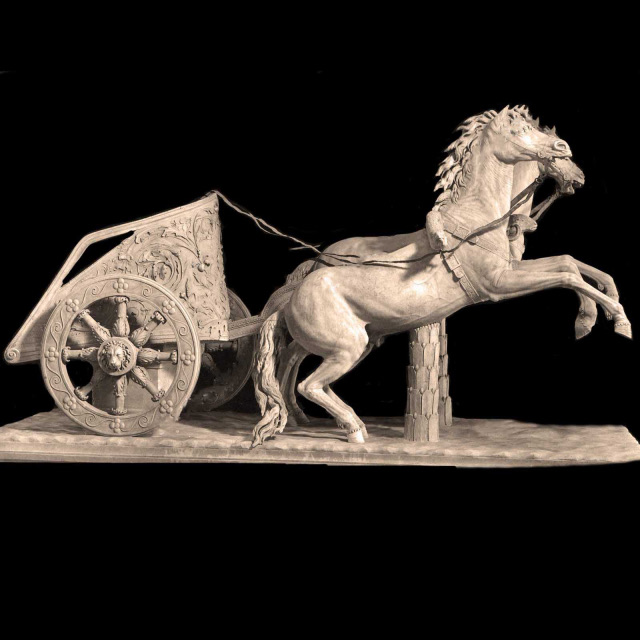
The sculpture The two-horse chariot is a symbol of power and recognition of commander.
A military chariot is a solid, fast, light and luxurious vehicle. Such chariots drawn by horses were driven by centurions, top Roman militaries. This is how they demonstrated their affiliation with the army elite.
In XVI century a chariot, which was called a biga by the Romans, was used as the episcopal throne in the St Mark’s church in Rome.
The dynamic composition we see consists of the pieces assembled during the restoration in 1788. The Italian sculptor Francesco Antonio Franzoni was in charge of the restoration of the chariot. He restored the wheels of the chariot and one of the horses, then he carved the second one himself.
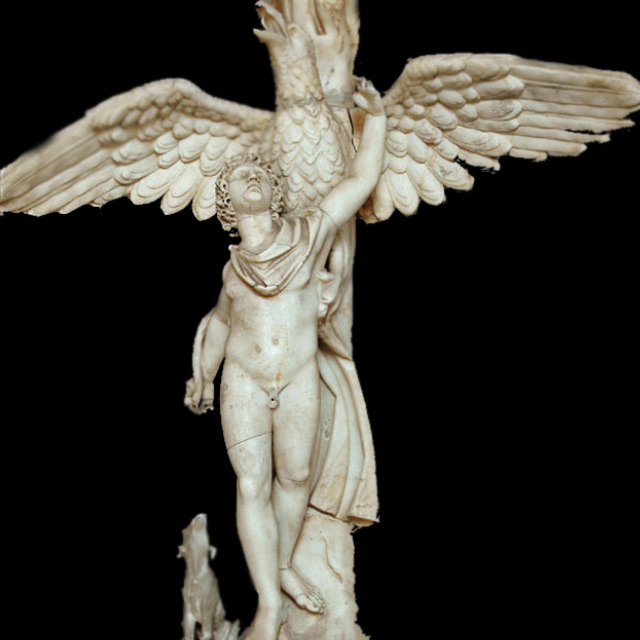
An eagle lifts a handsome young Greek Ganymede into the air and carries him to Mount Olympus, the mount of all gods.
According to legends, Zeus was so taken with Ganymede's unearthly beauty that he abducted the young boy. It is unknown if the supreme god sent the bird or he turned into the eagle himself and brought the youth to Olympus.
Zeus granted to the father of the stolen Ganymede a golden vine, a pair of horses and the word that his son would be forever young and immortal. After the abduction Ganymede became a cup-bearer in Olympus and served the gods with nectar and ambrosia.
The sculpture does not depict a flight, but just the moment when the eagle catches up Ganymede carefully and takes him off the ground.
The body of the bird is placed strictly vertically with the wings spread horizontally. Thus, the figures of Ganymede and the eagle, crossing each other, represent something like a calvary. Ganymede's dog raises its head and watches his master lifting into the sky.
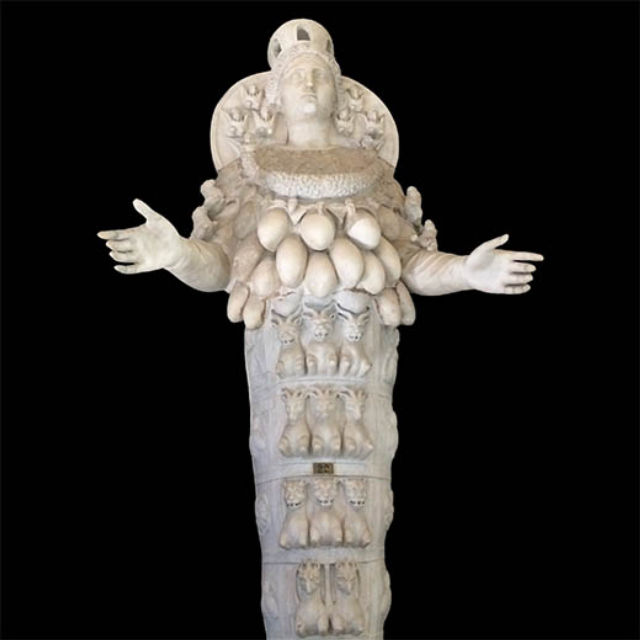
The Ancient Greek goddess of hunting Artemis represents the virginity, purity and fertility. In addition, she was considered as the protector of marriage, married couples and childbirth.
Artemis often acted as a huntress, carrying a quiver, a spear and arrows. She was also depicted surrounded by nymphs during the bathe in the river.
The cult animals of Artemis, who was the protectress of wild animals, were a bear and a deer.
Artemis of Ephesus is one of the images of the many-faced goddess. It symbolizes the fertility. Historians debate about the spherical objects on the figure. The views diverge. Some experts assert that it is a female breast, other specialists believe that this is a bunch of grapes. Its headdress and sumptuous attire are decorated with many heads of bulls and bees symbolizing nature and its fruit.
The Galleria degli Arazzi, 100 meters long, was arranged in 1790 by command of Pope Pius VII and inaugurated in 1838.
The Gallery got its name after the French city of Arras and the derivative word "arazzi" that designated woven non-fibre-shredding carpets. These colored clothes of golden and silver threads were made for the first time in Flanders at the end of the fifteenth century.
An excerpt from the original text. The full story is available in the audio guide.
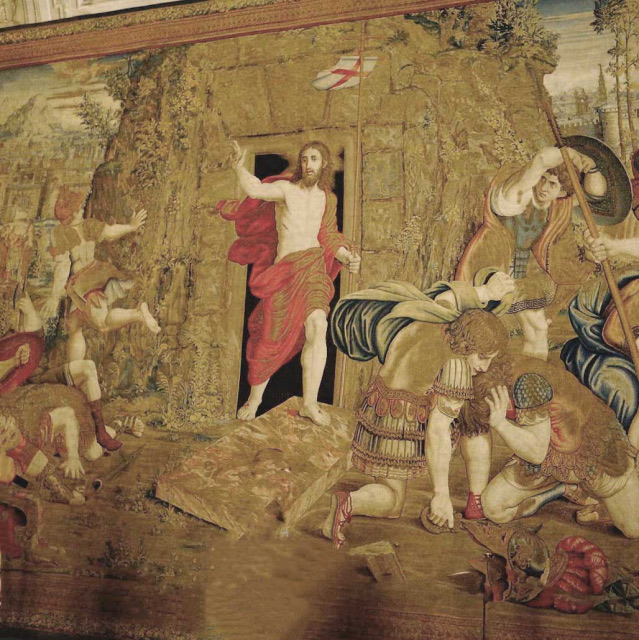
In whatever place of the room a viewer stands, he is surprised to discover that Christ seems to step forward. This is what makes this tapestry so unique.
The peculiarity is its "moving perspective", based on the mathematical calculations.
An excerpt from the original text. The full story is available in the audio guide.
The Gallery of Geographical Maps is one of three upper galleries in the Apostolic Palace in Vatican.
In order to host the Gallery of Geographical Maps one more storey was built in the Western wing.
An excerpt from the original text. The full story is available in the audio guide.
The Apartment of Pius V consists of a gallery with tapestries and two small rooms. They are not so spacious as other halls of the museum like the Borgia Apartment.
An excerpt from the original text. The full story is available in the audio guide.
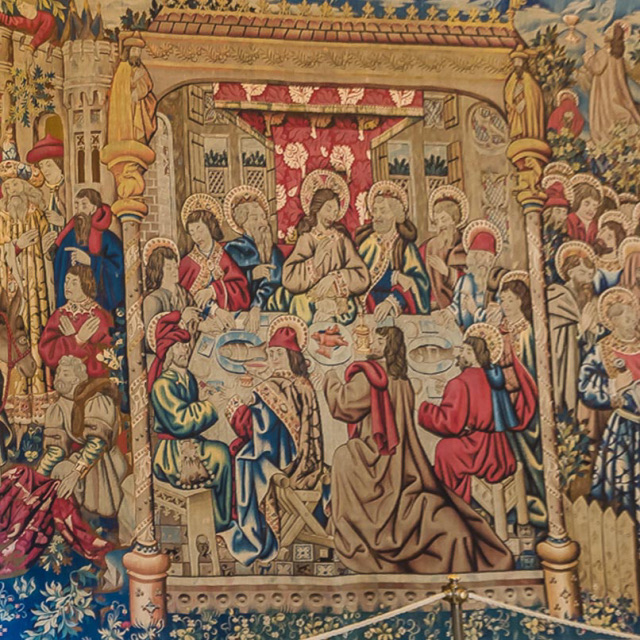
The Last Supper is a scene from the Bible that needs no introductions.
This is the last meal in the mortal life of Jesus Christ. He gathered his twelve disciples.
An excerpt from the original text. The full story is available in the audio guide.
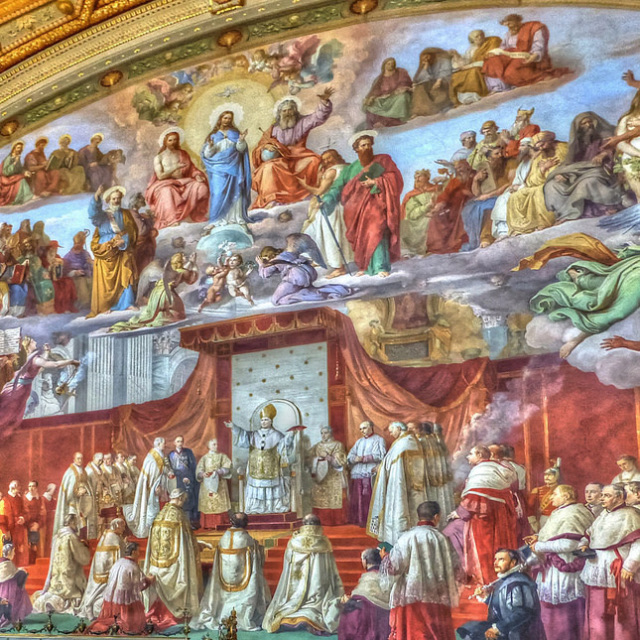
The Immaculate Conception proclaims that the Virgin Mary was initially chosen to be the Mother of the Son of God. That's why she was free from original sin and did not inherit it at the conception.
An excerpt from the original text. The full story is available in the audio guide.
The Stanze of Raphael consists of Stanza dell'Incendio del Borgo, Stanza della Segnatura, Stanza di Eliodoro and Sala di Costantino. The frescoes you see are the example of how the greatest painter Raphael Santi immortalized both his name and the names of his teachers and pupils due to his talent and generosity. But let's start from the very beginning.
The history of the Stanze began in 1508, when Pope Julius II moved from the Borgia Apartment to avoid any reminders about his predecessor, Pope Alexander VI Borgia.
An excerpt from the original text. The full story is available in the audio guide.
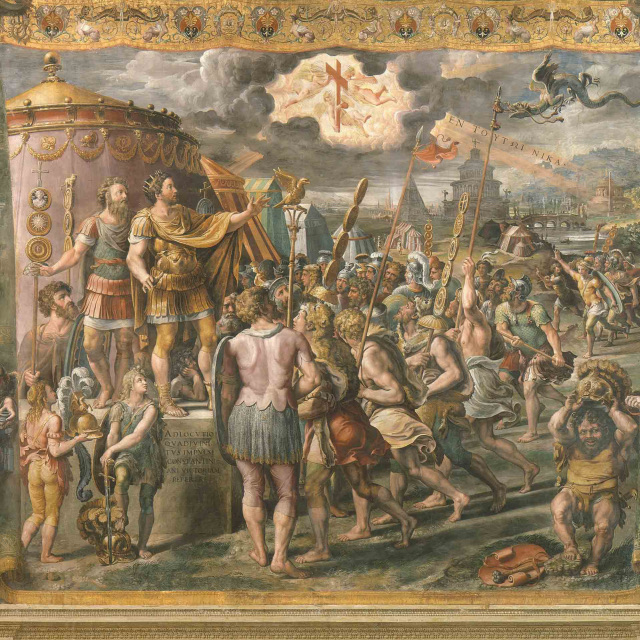
Belligerent Maxentius provoked a war with loyal Constantine, in the course of which the battle of Milvian Bridge took place in 312. It is there Constantine asked the God about help on the eve of the battle as he saw the superiority of the hostile forces.
He believed that Christian faith could do miracles and asked the God about a positive outcome of the battle. By the evening Constantine and his army saw a huge blazing cross in the sky, above the sun. It seemed to be made of stars, bearing the inscription: "By this symbol you will conquer!"
An excerpt from the original text. The full story is available in the audio guide.
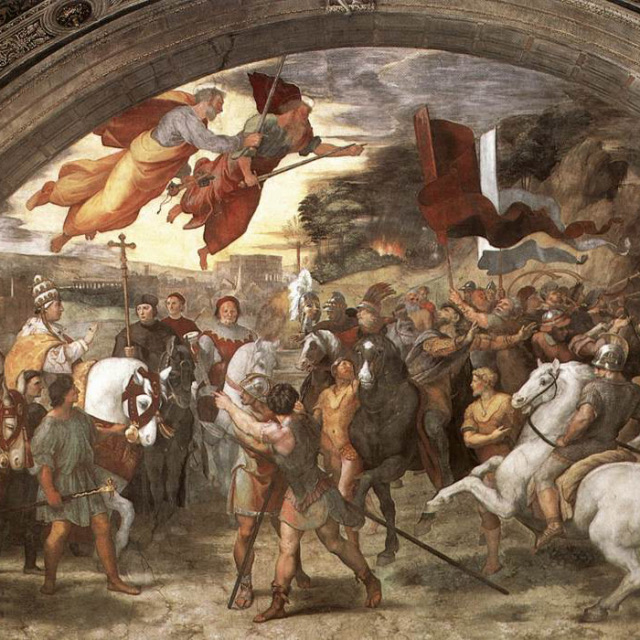
According to the legend, Pope Leo I stemmed the advance of Hun troops led by the conqueror Attila on his way to Rome. Leo I dressed in rich attire on white horse and surrounded by the cardinals appeared before Attila.
An excerpt from the original text. The full story is available in the audio guide.
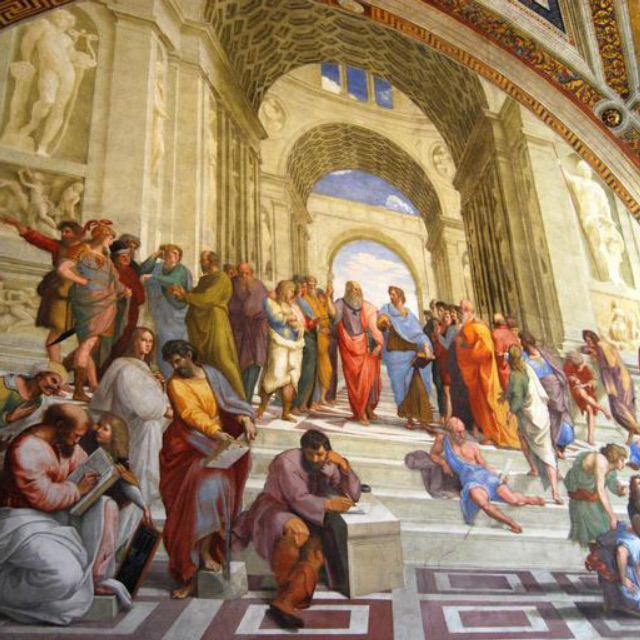
The School of Athens is the most famous Raphael's masterpiece. Among numerous artworks of Renaissance it is unanimously recognized the best one.
In the center are great thinkers Aristotle and Plato. Plato wears a red cloak and resembles Leonardo da Vinci. He puts up his hands. It refers to his vision and scientific views, according to which ideas develop on heaven. Aristotle in blue dress points downwards, asserting that ideas are inextricably linked with terrestrial life.
The fresco shows the great thinkers of the past – Socrates flanked by Plato and Diogenes lying on the stairs. In the foreground, at the bottom, is Pythagoras surrounded by pupils. Thoughtful Heracleitus is in the center, Euclid holding a compass is flanked by Zoroaster and Ptolemy talking to their pupils.
Raphael masterfully places about fifty personages in the fresco, paying due attention to each figure and giving considerable roles to all of them. In addition, he arranges his personages following the logic, but preserving their individual characteristics.
Michelangelo is reported to have visited the hall of frescoes and have recognized himself in the portrait of Heracleitus. He was very satisfied that Raphael portrayed him far away from the crowd of disputing windbags.
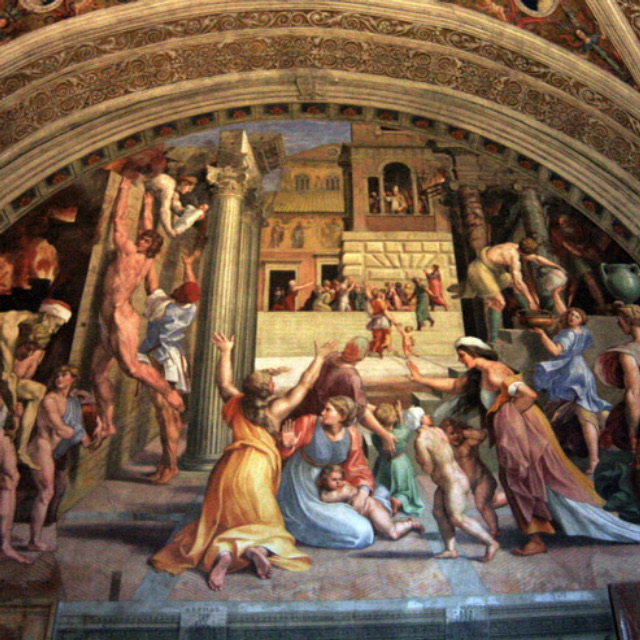
Borgo is a territory adjacent to the Palace of the Popes in Vatican.
In 847 there was a large fire. The efforts to douse the flames were successful only when Pope Leo IV stepped out onto the loggia. His presence was enough to put out the fire.
Basically, this fact is the main element of the fresco, though the Vatican Palace and the pontiff are depicted in the background. Pope Leo IV wears the tiara, a white cassock and a scarlet cloak. He delivers the Romans his blessed speech.
Raphael did not focus on the miracle performed by the Pope, but the frightened people who were caught off their guards.
In the foreground is a young mother with a child seeking for a shelter. The desperate women kneel and pray for the rescue.
Raphael painted the characters from the legendary poem "Aeneid" who managed to escape the fire in Troy. Aeneas snatched his old father Anchises. On the left, near Aeneas, is his wife, the young Creusa, and on the right is their son Ascanius.
The chapel in the south-west corner of the Borgia Tower you have entered was founded in 1631.
Before it became a hall of the museum, this small room was a part of the papal residence and used for liturgical purposes.
An excerpt from the original text. The full story is available in the audio guide.
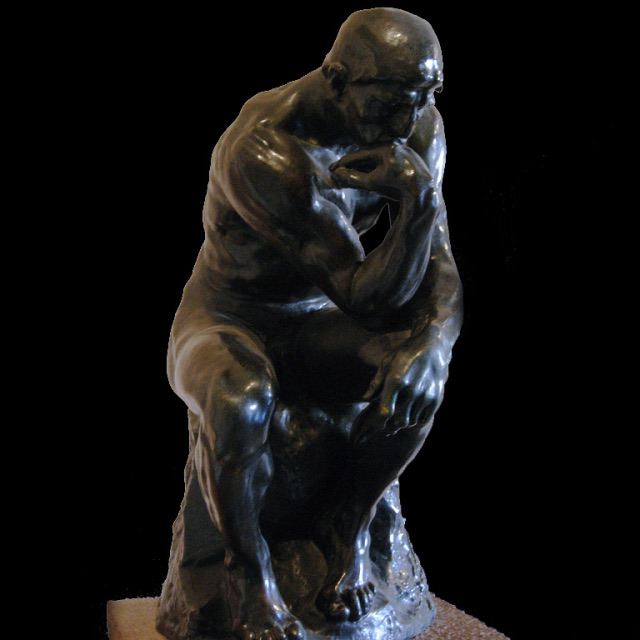
Initially, Auguste Rodin named his most prominent sculpture the Poet. The statue is sculptured as a part of the composition dedicated to the Divine Comedy, and it depicts Dante looking down at the sufferings of sinners.
An excerpt from the original text. The full story is available in the audio guide.
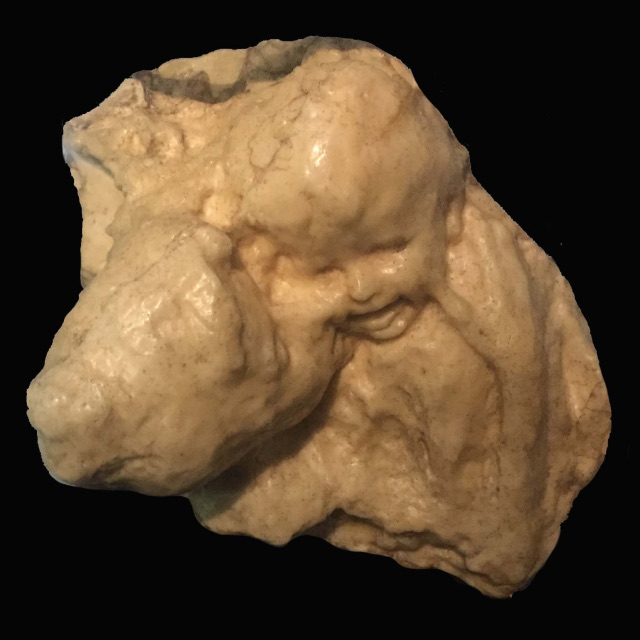
The wax sculpture depicts a portrait of the artist’s wife, Giuditta Pozzi, and their son Francesco.
The sculpture is dynamic and plastic, though it has no distinct shapes. This is a bright example of impressionistic sculpture.
An excerpt from the original text. The full story is available in the audio guide.
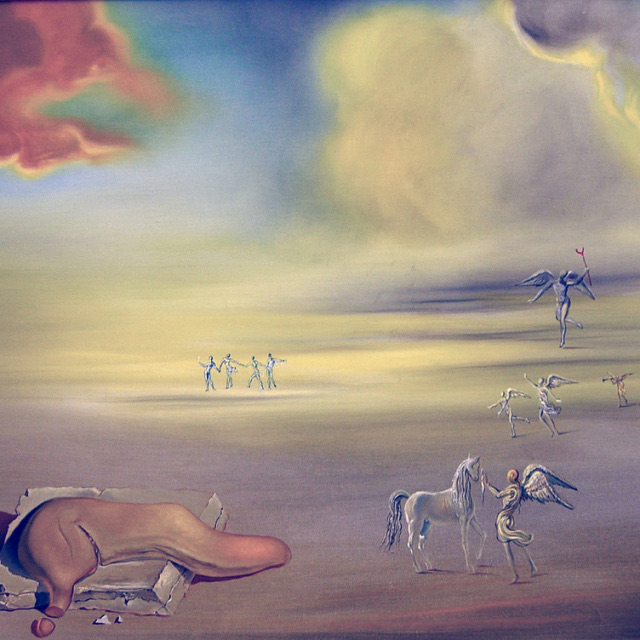
A landscape is an integral part of Dali's paintings. Many elements of this canvas — an endless desert, thin pale figures, magnificent clouds and distinct shadows of the objects — are shown in other Dali's paintings.
The canvas depicts ten figures: five angels, four humans and a white unicorn.
An excerpt from the original text. The full story is available in the audio guide.
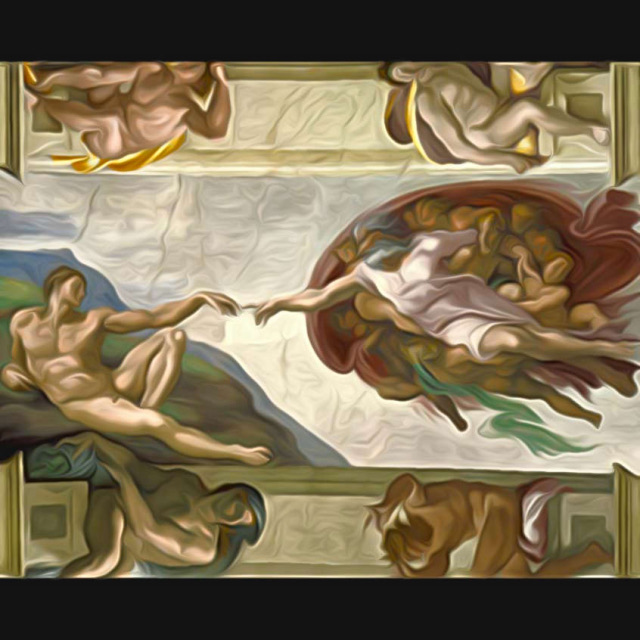
Adam, the first man on Earth, was bestowed life by the hand of the Almighty. The mind and will of a handsome and strong young man are still asleep; he limply reaches out his hand to God, who transmits with his index finger life-giving energy to his creation. The figure of Adam holds the power and strength received from God. His gaze, turned to God, is full of anticipation.
It is this short distance between the fingers of God and Adam that conceals the essence and magnetic attraction of the whole work. It seems that the Creator sends the man an electric current, the spark of life.
God is depicted flying across the boundless space of the Universe. A cloak floats behind him, like a sail. It unites angels surrounding the Creator.
An angel looks over God’s shoulder, struck by the beauty of the first man.
Art experts suggest that the outlines of the cape resemble the contours of the human brain. This symbol shows God as the supreme mind, the origin of man’s thoughts and will.
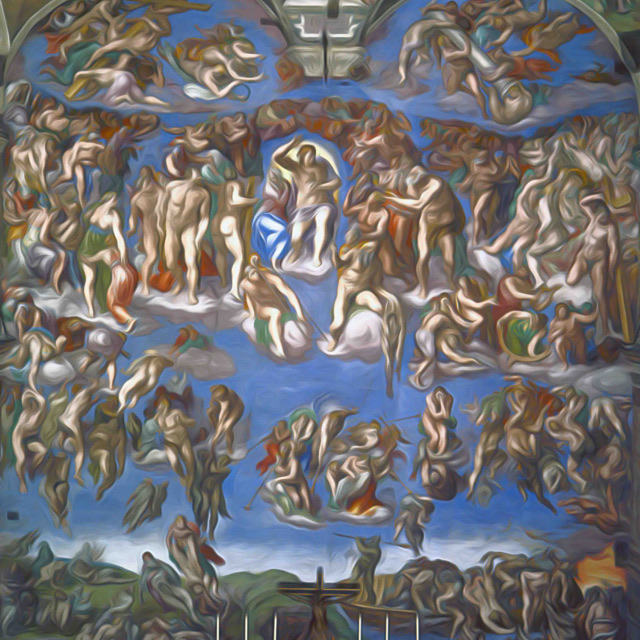
This is one of the most complex and mighty frescoes by design and level of its complexity.
On the top, to the left are angels bearing in flight. They hold the symbols of the Passion in their hands – the Cross, the Nails, the Crown of Thorns. On the right the angels hold up the column of the scourging and the spear with the sponge soaked in vinegar.
It should be noted that the angels are painted wingless, which make them look like ordinary people.
In the center of the fresco there is the Mother of God and Christ surrounded by the saints, waiting for the sentence. The figure of Christ is the biggest one, in a dynamic broad gesture, captured in the moment when the verdict of the Last Judgment is uttered.
Historians have been debating about the sentiments associated with the Christ’s gesture. One of them say that this is how he placates the surrounding agitation, the others assert that this is a cursing gesture.
The Virgin turns her head, awaiting the result of the Judgment.
Christ and the Virgin are surrounded by the holy martyrs. They hold the things that caused their death in one way or other.
On the right to Christ there is greybearded St Peter with the two keys of heaven. Below we can see St Bartholomew with his own skin which was flayed by pagans. The face of the martyr is a self-portrait of Michelangelo.
Opposite him is St Laurence with the gridiron, on which he was burned alive by Roman pagans.
On the right, on one of the clouds, we see St Catherine of Alexandria in a green gown. She holds the cogwheel served as the instrument of her execution. Above St. Catherine there is St. Paul in a red cape.
Next to her St Sebastian kneels holding the arrows in his hand. Roman soldiers shot arrows at him. Straight above Sebastian St. Andrew seems to come down on a cloud, holding the cross in his raised hand.
On the bottom to the left there are young virgins, sibyls and characters of the Old Testament. In the center of the lower section are the angels of the Apocalypse who are wakening the dead by blowing their trumpets.
On the right, at the bottom, angels and devils make the damned fall down to hell.
At the bottom is Charon who ferried souls on his boat to lead them before the judge Minos, whose body is wrapped in the coils of the serpent.
As the fresco depicts nude figures, Michelangelo was involved into the conflict with moralists.
The Master of Ceremonies Biagio da Cesena called him to observe the proprieties. He complained that nude figures were not allowed to have been painted in so sacred place. Michelangelo could not contradict him directly, but he responded in another way. On the right, at the bottom, among the dead who were led to Hell he painted a ridiculous man with donkey ears and covered by coiled snake. The figure and face of the man resembled the face of the cardinal. When the master of ceremonies saw his face on the fresco, he complained to the Pope Paul III. The Pope’s response was brilliant:
“I can give orders on the earth, or at the very least I would have some impact, if it deals with the limbo. But in all matters relating to the Hell, I am helpless. You should discuss it with Michelangelo…”
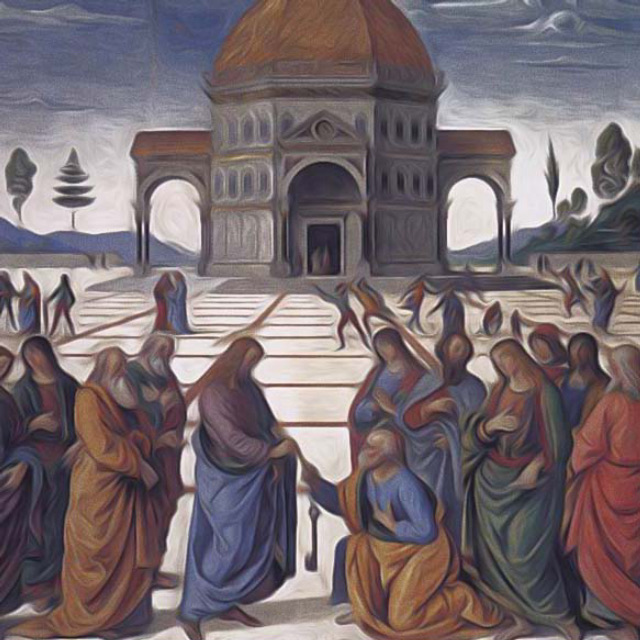
Christ solemnly hands his disciple the gold and silver keys, thus giving him the permission to forgive sins and allow souls into heaven. This fresco illustrates the sixteenth chapter of the Gospel of Matthew.
The main message of the fresco is depicted in the centre: handing the Apostle Peter the keys to the kingdom of heaven.
An excerpt from the original text. The full story is available in the audio guide.
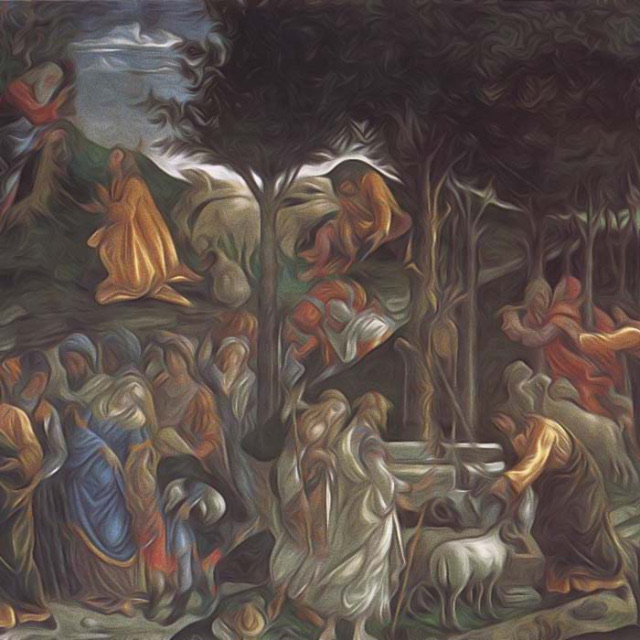
The fresco shows several most important events from the life of Moses.
On the right, Moses intercedes for a Jew who works in construction and is beaten by an overseer. Moses accidentally kills the Egyptian and flees the city.
An excerpt from the original text. The full story is available in the audio guide.
There are no contact forms on the Waguide website. The main website uses Google Analytics for visitor statistics. Tiqets processes bookings and payments and may process connection data and cookies. The hosting provider may process technical connection data.
Image sources
Museum images are provided by the Waguide project. Photo of the Louvre: Diego Lopez Sebastian (Dieglop), CC BY-SA 4.0. Photo of Winged Victory of Samothrace: Mbzt, Wikimedia Commons. Reproductions of the paintings are in the public domain. Images may be cropped for display purposes.