
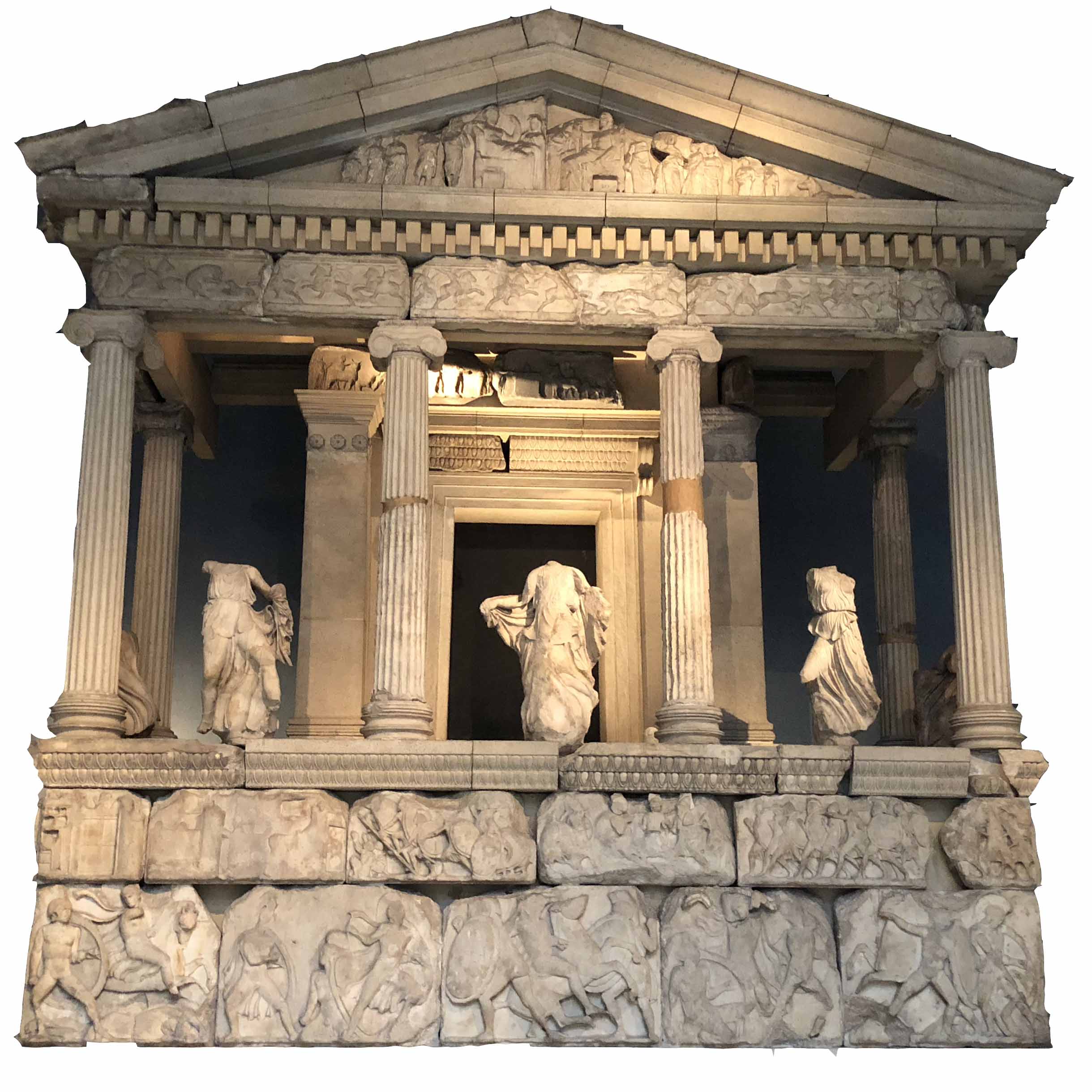
The Nereids Monument is the tomb of Erbinna, a Lycian ruler, built in the form of a temple on a ten-meter-high pedestal with columns. This colossal tomb was constructed in 400 BCE and discovered by an English traveler in 1840 on the territory of modern-day Turkey.The most dynamic feature of this sculptural ensemble is the slender and graceful bodies of the Nereids. The light and weightless nymphs seem as if they have just emerged from the sea foam onto the shore. Only a moment ago they rose from the sea floor and stepped onto dry land, and already they are whirling in a dance—each in her own way.Mythology tells us that the Nereids, daughters of the sea god Nereus, have lived in the depths of the sea for millennia, singing songs and dancing to the rhythm of the waves. They only rarely appear to people on land—in the bright moonlight. Eleven sculptures of the Nereids, which once adorned the tomb, are now arranged along the gallery wall following the reconstruction.The statues have no heads or faces, and their arms are damaged, but this strange and eerie feature has a magnetic effect on the viewer. Dolphins, cuttlefish, and seagulls are positioned at the feet of the sea princesses, and the Nereids themselves seem to have frozen in a single frame—a single glance at them is enough to understand that they are dancing wildly.
Original author’s text, preserved unchanged.