
waguide
EN

Room 40 · Medieval Europe

The Lewis Chessmen

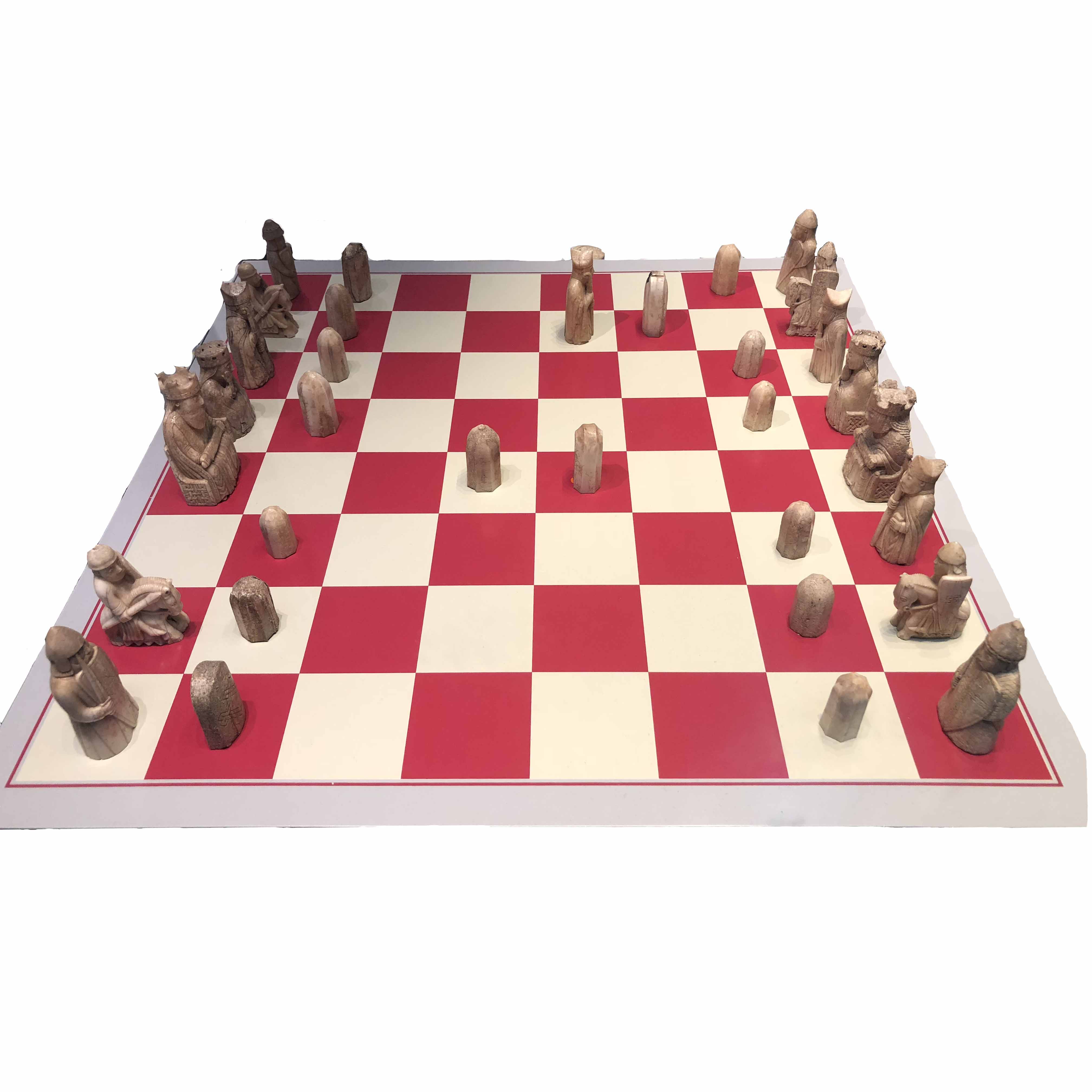
Look closely at the faces, swords and carved thrones of the Lewis Chessmen in Room 40. These small medieval figures turn a game into a cast of characters. Read their story and find them on Waguide’s British Museum route.

Editorial introduction · Waguide

British Museum audio guide

The full story
Before us are 78 large chess pieces, handcrafted by a medieval Norwegian master between 1150 and 1200.The chess pieces are carved from walrus tusk and whale tooth—materials commonly used at the time. The pieces were accidentally discovered on a Scottish island by a farmer, who hastily sold the find to a merchant. Since then, the pieces have been auctioned off on multiple occasions until they eventually found their way to the Scottish and British museums. Incidentally, these pieces could also have been used in hnefatafle—a Scandinavian board game similar to both chess and checkers. Each piece possesses a sculptural aesthetic, as if they were miniature versions of actual statues. We see long-haired kings on thrones, queens holding cups, bishops in miters, mounted knights with shields and spears, guards with swords, and pawns shaped like pyramids. The pieces are sturdy and somewhat angular—this is likely how the ancient Scandinavians saw themselves. They transferred their warlike nature and severity into art, transforming the chessboard into an imaginary battlefield.

Original author’s text, preserved unchanged.

More from the British Museum: Ramesses II at the British Museum

Room 40 · Medieval Europe

Before your visit, please check the museum’s official website for opening hours, the availability of exhibition rooms, entrance points, facilities for visitors with reduced mobility, and luggage policies.

The British Museum
Privacy

There are no contact forms on the Waguide website. The main website uses Google Analytics for visitor statistics. Tiqets processes bookings and payments and may process connection data and cookies. The hosting provider may process technical connection data.

Image sources

Museum images are provided by the Waguide project. Photo of the Louvre: Diego Lopez Sebastian (Dieglop), CC BY-SA 4.0. Photo of Winged Victory of Samothrace: Mbzt, Wikimedia Commons. Reproductions of the paintings are in the public domain. Images may be cropped for display purposes.

The Louvre — Diego Lopez Sebastian · Winged Victory of Samothrace — Mbzt · CC BY-SA 4.0